


Chess openings
Best Chess Openings for Beginners
The seven opening principles
Before any named opening is worth learning, seven habits decide your first ten moves. They come from what the pieces need — which is why they haven't changed in a century, and never will.
- Principles
- Seven
- Moves they govern
- Roughly the first ten
- Openings they replace
- All of them, at first — every named opening is these principles pre-packaged
- When to break them
- When a concrete tactic you can calculate says so
What the opening is actually for
The opening has three jobs, and only three: put pawns in the centre, get the knights and bishops onto useful squares, and tuck the king away. When every piece is developed and the king is castled, the opening is over — whether that took eight moves or twelve, and whether or not anything on the board has a name.
Everything below serves those three jobs. A move that serves none of them is, at best, a free move for your opponent. And if the moves themselves are still new, start with how to play chess for beginners and come back.
The seven principles
Each principle comes with a board, so you can see exactly what it looks like in play. The boards use the same colours as our move-by-move trainers: gold marks a fact worth noticing — a highlighted square, or who guards what — red marks a threat and circles its target, and a thin black arrow points out a move that is coming.
1 · Put a pawn in the centre
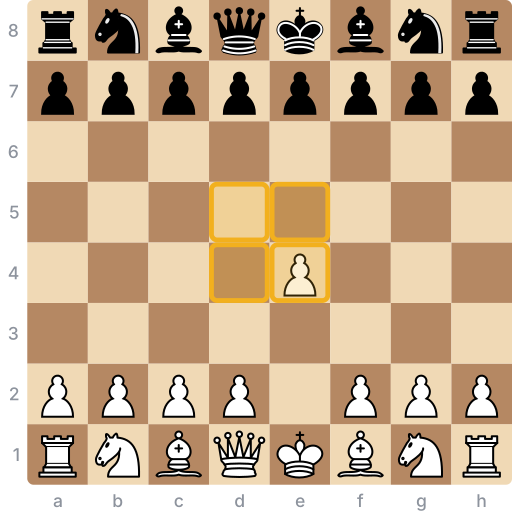
After 1.e4. The four highlighted squares are the centre — the whole opening is a fight over them. Open with 1.e4 or 1.d4 as White; meet them in or near the centre as Black. The four middle squares are where every piece does its best work, and a pawn there stakes your claim while opening lines for a bishop and the queen.
The violation: edge-pawn moves like 1.a4 or 1.h4, which claim nothing and develop nothing.
2 · Develop knights and bishops toward the centre
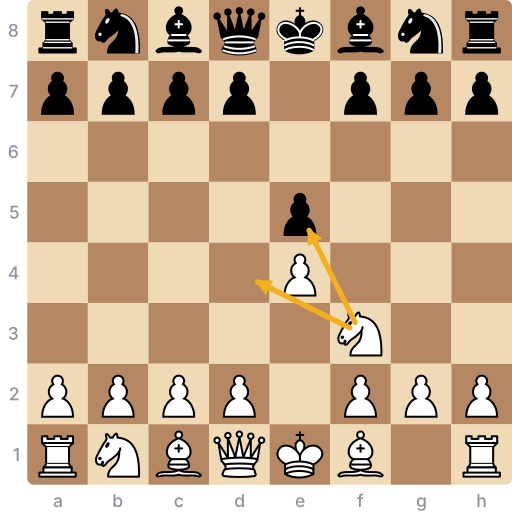
The knight on f3 already works on the centre: it attacks e5 and covers d4. A knight on f3 watches the middle of the board; a knight on the rim watches the edge of it. Knights usually come out before bishops — their best squares are obvious right away, while a bishop's best diagonal often depends on what your opponent builds.
The violation: moving pawns while three pieces still sit at home. Pawns don't develop; they only open doors for the pieces that do.
3 · Do not move the same piece twice
Every move you spend re-moving a developed piece is a whole move your opponent spends developing a new one. Two or three of those and you're effectively playing with fewer pieces for the rest of the opening.
The exception is built in: if the piece is attacked and worth more than the attacker, move it — that's a concrete reason, not a habit.
4 · Keep the queen home early
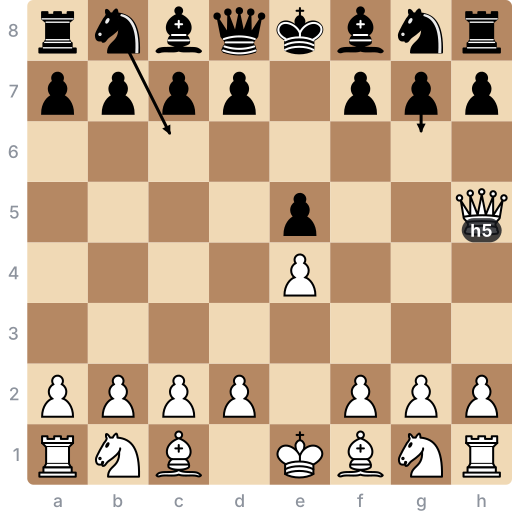
The early queen on h5. Black's next moves — ...Nc6, later ...g6 — develop and attack her at the same time. Black builds for free. The queen is the strongest piece, and that's exactly the problem: everything cheaper attacks her profitably. Bring her out on move three, and your opponent develops knights and bishops with threats against her — you retreat, they build, and every chase costs you a full turn.
She comes out when the minor pieces are done and there's a job only she can do.
5 · Castle early
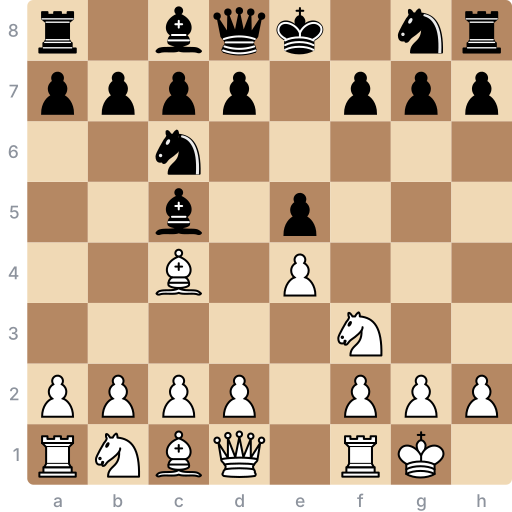
White castled on move four. The king is tucked away, and the rook on f1 is already in the game. Castle within the first eight moves or so, before starting anything sharp. A king in the centre stands on the two files most likely to rip open, and one tactic down an open e-file ends games that were otherwise fine. Castling also does double duty — it's the fastest way to bring a rook toward the middle.
The violation: "one more attacking move first." The attack will still be there after O-O; your king may not be.
6 · Connect the rooks, then claim open files
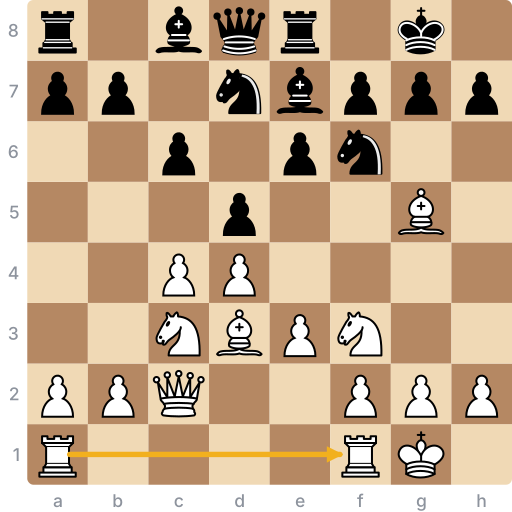
White's back rank is empty between the rooks — they defend each other and can swing to any file that opens. This is what "development finished" looks like. When nothing stands between your rooks on the back rank, development is finished. Rooks are the last pieces to find work: they want the files that pawn trades open up, and they're the reason the opening ends — everything else exists so these two can enter the game.
The violation: launching an attack while a rook still sleeps in the corner behind three of its own pieces.
7 · Make every move do a job
Before each move, name what it does: claims the centre, develops a piece, protects the king, answers a threat. A move that does two jobs beats a move that does one; a move that does none is a gift. This is the principle behind the other six — they're simply the jobs that come up in every game.
The violation: one-move threats that develop nothing. Your opponent parries while developing, and the trade of moves favoured them.
Why they work: the arithmetic of moves
The opening is a race with a strict budget: about ten moves each before the fight starts. Every principle above is the same statement about that budget — a move that develops is banked, and a move that doesn't is spent. That budget is the first lesson of chess strategy.
The board's geometry does the rest. A knight in the middle of the board reaches eight squares; in the corner it reaches two. A bishop behind its own pawns is a tall pawn. A king on its starting square sits on the file most likely to open. Centralised, developed, castled — the principles aren't etiquette, they're the shapes in which the pieces physically work best.
And there's a punishment mechanism. When one side is fully developed and the other isn't, tactics start appearing for the developed side — pins, forks and sacrifices that simply don't work against a finished position. Development isn't an aesthetic; it's where chess tactics come from.
Your opening against everything you never studied
Sooner or later — usually move four — an opponent plays something no guide mentions. The principles are your opening there, because they never depend on the opponent cooperating. Run the same three checks every time:
- What did that move attack? Name the piece or square before replying. Most strange moves attack nothing, which means you're free to continue.
- Is anything of mine hanging? Attacked more times than defended? Fix it. Not attacked? Don't invent a defence.
- Which piece is still at home? Develop it toward the centre. Against a principle-breaking opponent, calm development is itself the punishment — your pieces arrive, theirs don't.
This is also why memorising lines fails beginners: a line assumes the opponent's moves, and beginner opponents don't keep appointments. Principles assume nothing.
When to break a principle
Every principle bends to one thing: a concrete tactic you can calculate to the end. If moving the queen out on move four wins a piece by force, move the queen — the principle described the average position, and you're no longer in the average position.
The discipline is in the wording: break a principle for a reason you can state in moves ("this wins the knight because both defenders are pinned"), never for a feeling ("this looks aggressive"). Feelings are what the principles exist to protect you from; calculation is what they yield to. Chess puzzles are how you train that calculation.
From principles to a named opening
A named opening is a set of these principles worked out into concrete squares against concrete replies — the Italian Game is "centre, knights, bishop to its best diagonal, castle" made specific. That's why every good beginner opening feels similar to play: they're the same seven habits wearing different coordinates.
The Ruy Lopez and the Scotch Game are the same habits with a different third move; the London System and the Queen's Gambit are the same habits starting from 1.d4.
So the order of learning is: principles first, until they're reflexes; then one named opening as White and one answer to 1.e4 as Black, chosen for the kind of game you enjoy. Part 3 of this series gives you nine to pick from, and Part 2 shows you how to choose between them.
The classic violations
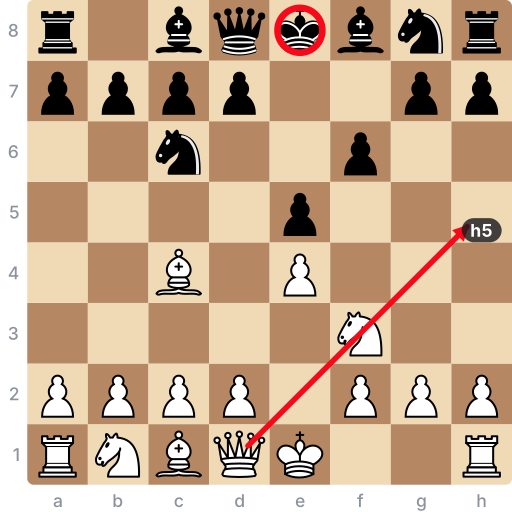
- The early queen raid. 2.Qh5, hunting the f7 mate. It wins games until opponents learn the two defensive moves, and it teaches nothing that survives that day — while the habit of chasing cheap mates costs you years.
- Pawn-grabbing in the opening. Spending three moves to win a side pawn while your opponent finishes developing. You come back from the errand a pawn up and a game down.
- The f-pawn lever. An early f3 or f6 opens the one diagonal that points at your own king and takes the best square from your own knight. Two problems, zero jobs.
- Copying the opponent. Mirroring feels safe and isn't: symmetrical positions always break in favour of the side who moves first out of them, and the copier eventually faces a threat that copying can't answer.
- Attacking before developing. A two-piece attack against a full defence loses the pieces. The attack you launch after castling, with rooks connected, is the same attack — with reinforcements.
Questions people ask
How many moves should the opening take?
Usually eight to twelve: two or three pawn moves, four minor pieces out, castle. If you're past move twelve with pieces still at home, the position will tell you soon.
Should I learn principles or memorise an opening?
Principles first, always. A memorised line stops working the first time your opponent leaves it — which at beginner level is nearly every game. A named opening learned later sits on top of the principles, not instead of them.
Is Scholar's Mate worth playing?
Scholar's Mate is the four-move checkmate behind every "how to win chess in 4 moves" search — and no. Against the standard defence you've moved your queen twice to accomplish nothing, and every developing move your opponent makes now comes with a threat against her. Four-move mates are something to know how to stop, not something to build a game on.
Knights before bishops — always?
Usually, not always. The knight's best square is known on move one; the bishop's best diagonal depends on the pawn structure. When the bishop's job is already obvious — as in the London System, where it must leave before e3 — the bishop goes first.
When exactly should I castle?
As soon as the kingside minor pieces are out, and before you start any operation in the centre. Delay only when you can name the concrete reason the king is safer waiting — which at beginner level is almost never.
My opponent breaks every principle and still wins. Why?
Because beginner games are decided by hanging pieces, and principles don't catch blunders — attention does. The principles guarantee you reach a good middlegame, not that you survive it. How to win chess at this level is blunt: hang fewer pieces than they do. Keep checking what's attacked every move — a daily chess puzzle trains exactly that attention — and the principled positions start converting.
Why not bring the queen out early if she is the strongest piece?
Strength is why she can't stay out. Any pawn or knight that attacks her forces her to move — a full move you lose, a developing move they gain, repeatable for as long as you leave her in reach. Strongest piece, cheapest target.
Part 1 of the best-chess-openings-for-beginners series. Every board position in this article is replayed through a chess engine library at build time, so each position is legal and reachable. The named openings mentioned here each have a full move-by-move course of their own.
